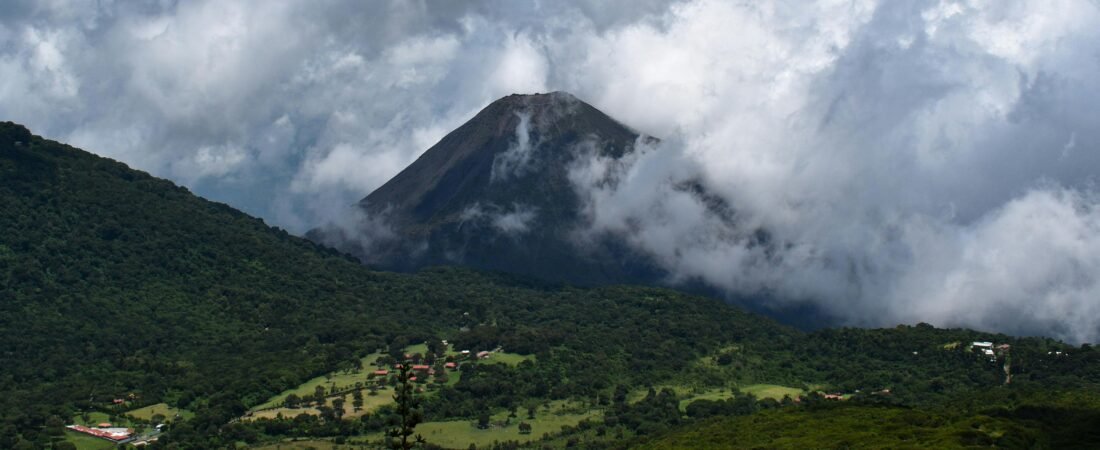
If there’s one experience that tops almost every traveler’s El Salvador bucket list, it’s hiking Santa Ana Volcano, locally known as Ilamatepec. Rising dramatically in the country’s western highlands, this majestic stratovolcano rewards hikers with one of Central America’s most breathtaking sights: a glowing turquoise crater lake hidden inside a vast volcanic bowl, often framed by drifting steam and rugged crater walls.
Standing at 2,381 meters (7,812 feet), Santa Ana is the highest volcano in El Salvador and part of the Ilamatepec Volcanic Complex. Dormant since its last eruption in 2005, it’s considered safe and accessible for visitors when explored with a guide. The combination of dramatic scenery, manageable difficulty, and that jaw-dropping crater view makes this hike a highlight of nearly every trip.
The Hike: What to Expect
The trail begins in Cerro Verde National Park, about 1.5–2 hours from San Salvador. For safety and conservation, all hikes are guided, usually departing in organized groups accompanied by park police. Most tours start around 11:00 AM, once the morning fog lifts—maximizing your chances for clear views at the summit.
The hike is moderate, covering roughly 4–5 kilometers round trip with about 400 meters of elevation gain. Reaching the top typically takes 1.5–2 hours, depending on pace and group size.
You’ll start in lush cloud forest, where the air is cool and the trail well maintained. As you climb higher, the landscape shifts to open volcanic terrain, with loose rock underfoot and a faint sulfur scent signaling your approach to the crater.
Then comes the moment that makes it all worthwhile.
At the summit, the massive crater opens beneath you, revealing Laguna Esmeralda—a shimmering crater lake whose colors shift from deep turquoise to brilliant green depending on the light. On clear days, you can spot Izalco Volcano, Cerro Verde, rolling coffee plantations, and even Lake Coatepeque far below.
Why Santa Ana Volcano Is So Special
What truly sets Santa Ana apart is the intensity of its crater lake’s color. Fed by rainwater and volcanic minerals, the lake looks almost unreal—photos rarely capture its true vibrancy. The stark contrast between the barren crater walls and the luminous water creates an almost otherworldly scene.
Add in the occasional steam vents and the awareness that you’re standing atop a sleeping volcano, and the experience feels powerful and humbling.
The lower trail also delights birdwatchers, with toucans, woodpeckers, and other species thriving in the cloud forest. Plus, the cooler temperatures at elevation offer a refreshing break from El Salvador’s coastal heat.
Practical Tips for Your Visit
- Getting There: Most travelers join guided tours from San Salvador, El Tunco, or Santa Ana city ($20–40 per person, including transport and guide). Public buses are possible but more time-consuming.
- Cost: Park entrance is approximately $3 for foreigners; guide fees are usually included in tours.
- Best Time to Go: Dry season (November–April) offers clearer views and less mud. Avoid rainy afternoons, when clouds often hide the crater.
- What to Bring: Sturdy hiking shoes, at least 2 liters of water, snacks, sunscreen, a hat, and light layers—the summit can be windy and cool.
- Time Needed: Plan for a half-day trip, with most tours returning by mid-afternoon.
Final Thoughts
Hiking Santa Ana Volcano isn’t just a trek—it’s an iconic El Salvador experience. It blends adventure, dramatic landscapes, and a true “wow” moment when you reach the crater rim.
Whether you’re an experienced hiker or simply chasing one unforgettable viewpoint, Ilamatepec delivers. If El Salvador is on your 2025 travel plans, this natural wonder deserves a top spot. Trust us—you won’t regret it.